Timber decking in Teesside
Hardwood such as balau roughly doubles the board cost and lasts considerably longer.
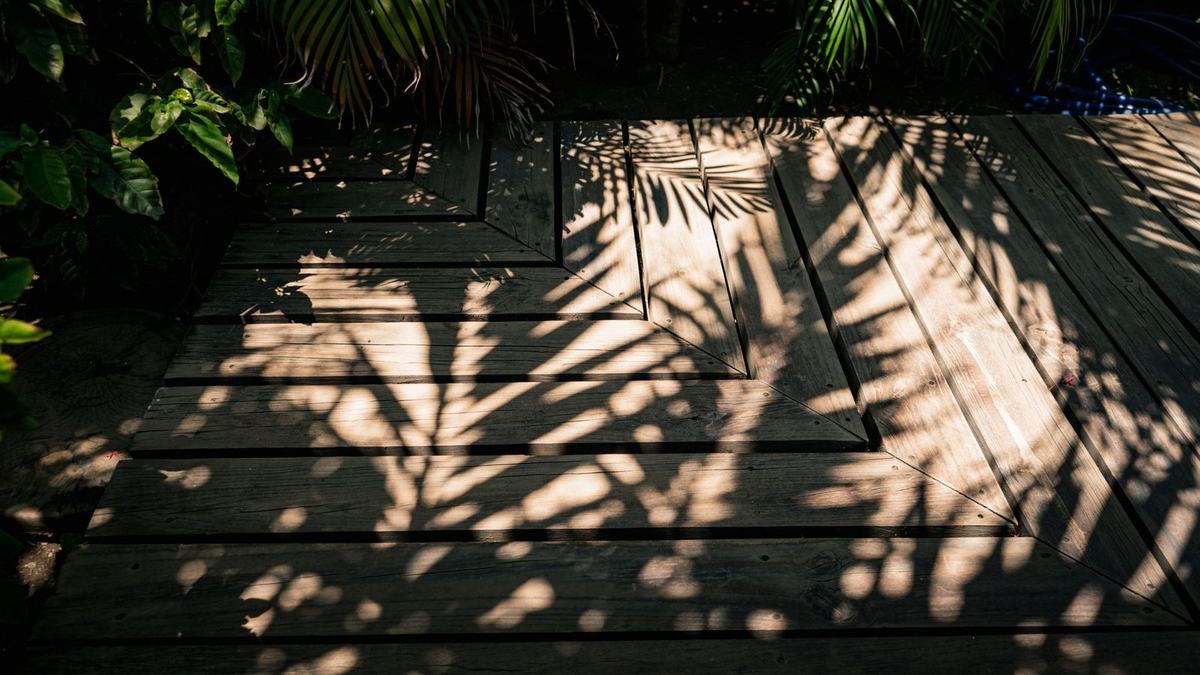
Softwood, done to the right specification
Almost all softwood decking on Teesside is treated Scandinavian redwood or whitewood. The specification that matters is the treatment class: Use Class 4 for anything in or near ground contact, including every post and every joist near the soil, and Use Class 3 for boards above. The other detail that separates a 20-year deck from a 7-year one costs almost nothing: every sawn end gets brushed with end-grain preserver on site, because the treatment does not run all the way through the section and a bare cut is where rot starts.
Grooved or smooth, and how it is fixed
Grooved boards were sold for decades as anti-slip. In practice the grooves collect debris and hold moisture, so laying them smooth side up and relying on maintenance is a common choice among experienced fitters. Fixings should be stainless or high-grade coated screws, twice per joist, pre-drilled near board ends. Bright steel screws bleed rust stains down the face within a year or two, and on coastal gardens in Redcar or Saltburn they corrode noticeably faster.
Hardwood, when the budget stretches
They shrug off wear, hold their section without cupping and can run 30 years plus, and they need annual or biennial oiling to keep the honey colour rather than silvering. Hardwood is also unforgiving to fit: it needs pre-drilling throughout and stainless fixings, so labour goes up alongside materials.
Maintenance that keeps it looking deliberate
An annual routine: sweep clear, wash off algae in early spring, let it dry properly, then a decking oil rather than a film-forming paint. Oil soaks in and wears back gracefully; paint peels and leaves you sanding. If it will not, composite is the more sensible purchase, and the material comparison guide quantifies the trade.
Repairs and adaptations
Timber's advantage is that it stays easy to change: a board can be lifted, a step added, a section extended. Existing decks with sound frames often only need surface work, which is what decking repair and refurbishment covers. Timber remains the popular choice across the older gardens of Middlesbrough and Stockton.